
When I wrote about the proposed PURR Act earlier this year, the bill had stalled in Congress. I thought we had some breathing room.
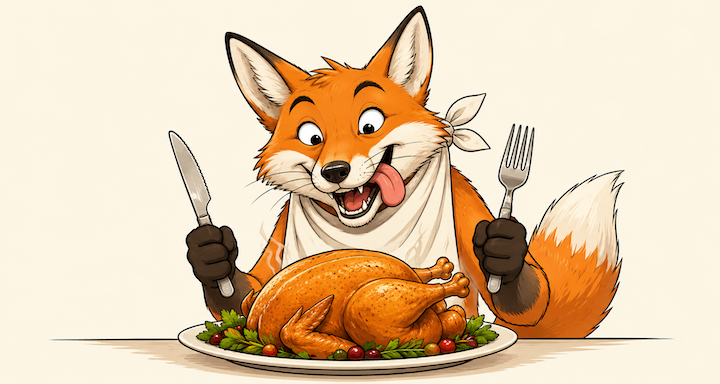
The PURR Act would effectively shift much of the oversight of pet food labeling from state regulators to the FDA while sharply limiting state authority—a change I described at the time as giving the proverbial henhouse keys to the fox.
Apparently, not so much.
The July 2026 issue of Petfood Industry magazine devotes an entire feature to the PURR Act and the new Innovative FEED Act, describing them together as reforms needed to “keep pace with advances in animal health.” The article calls the current regulatory system a “patchwork” and argues that these bills, which are currently pending in the U.S. Congress, would modernize oversight and speed innovation.
In other words, the industry’s lobbying effort has not gone away. If anything, it appears to have broadened.
The PURR Act would shift much of the regulatory authority for pet food labeling from the states to the FDA. Critics, including both AAFCO and the National Association of State Departments of Agriculture (NASDA), argue that FDA does not currently have the personnel or funding to take on those responsibilities. At the same time, the bill would severely limit state regulators’ ability to control pet food labeling and marketing.
Today, state feed control officials review and register labels, investigate consumer complaints, inspect manufacturing facilities, collect samples from store shelves, verify regulatory compliance, and often discover problems long before they become national news. They are, quite literally, the boots on the ground.
AAFCO’s ingredient definition process is one of the primary pathways used to evaluate new animal feed ingredients for safety and intended use. Historically, these were reviewed through AAFCO’s ingredient definition process in collaboration with FDA. Since the FDA-AAFCO MOU (Memorandum of Understanding) expired in 2024, that process has been replaced by AAFCO’s new scientific review pathway while FDA develops its own long-term review program. This regulatory flux created an opportunity for industry to push legislation that would advance its long-term policy goals.
Meanwhile, the Innovative FEED Act would create a new category of “zootechnical animal food substances” that would be reviewed through the food additive pathway rather than the new animal drug pathway or the AAFCO ingredient definition process. The industry wants faster innovation and more marketing opportunities. But perhaps ingredients intended to produce biologically significant effects should continue to get the same scrutiny as new ingredients or animal drugs.
At the same time, similar concepts have found their way into the FY2026 Agriculture Appropriations bill, potentially extending some of these changes beyond pet food to animal feed generally. The appropriations bill also suggests funding related to FDA implementation. Whether that funding would be sufficient to replace the oversight currently provided by state feed control officials remains an open question.
What should concern all of us is what this ultimately comes down to: who actually protects consumers?
Pet parents don’t really care whether a label is reviewed by a state official or a federal official. They care that someone independent has verified that the label is truthful and the food is safe.
The officials and organizations that do this work every day—including AAFCO and NASDA—have expressed serious concerns about the federal preemption proposed in the PURR Act. It’s not that the regulatory system shouldn’t be modernized. AAFCO has been working hard at pet food label modernization for years and has made substantial progress. I’ve been part of that effort myself. But modernization should not come at the expense of real day-to-day oversight.
Having been an advisor to AAFCO for more than two decades, I understand this system from the inside. It isn’t glamorous, and it certainly isn’t perfect. But I also know how much work state regulators do behind the scenes to review labels, evaluate ingredients, answer consumer complaints, investigate problems, and remove noncompliant products from the marketplace. Most people never see that work—but our pets benefit from it every day.
Those protections should not disappear without a very careful discussion of what will replace them. Together, these three proposals would fundamentally restructure the current system, replacing much of today’s state-based oversight with centralized federal framework.
The appearance of these proposals together in a leading industry publication suggests that the effort to reshape animal food regulation is continuing despite the PURR Act’s lack of movement.
Consumers should pay close attention, because significant regulatory changes can happen quietly, long before most people realize they are being debated.
Industry exists to develop products and bring them to market efficiently and profitably. Regulators exist to ask essential questions before those products reach consumers. Those are very different missions, and a healthy regulatory system depends on both.
Taken together, the PURR Act, the Innovative FEED Act, and the related appropriations language aim to move regulatory authority away from the state officials who currently provide day-to-day oversight of pet food. Whether that ultimately benefits consumers, their pets, or the integrity of the food supply deserves much more transparency before Congress puts the fox in charge of henhouse security.
I’ll continue to follow these developments closely and keep you updated.