

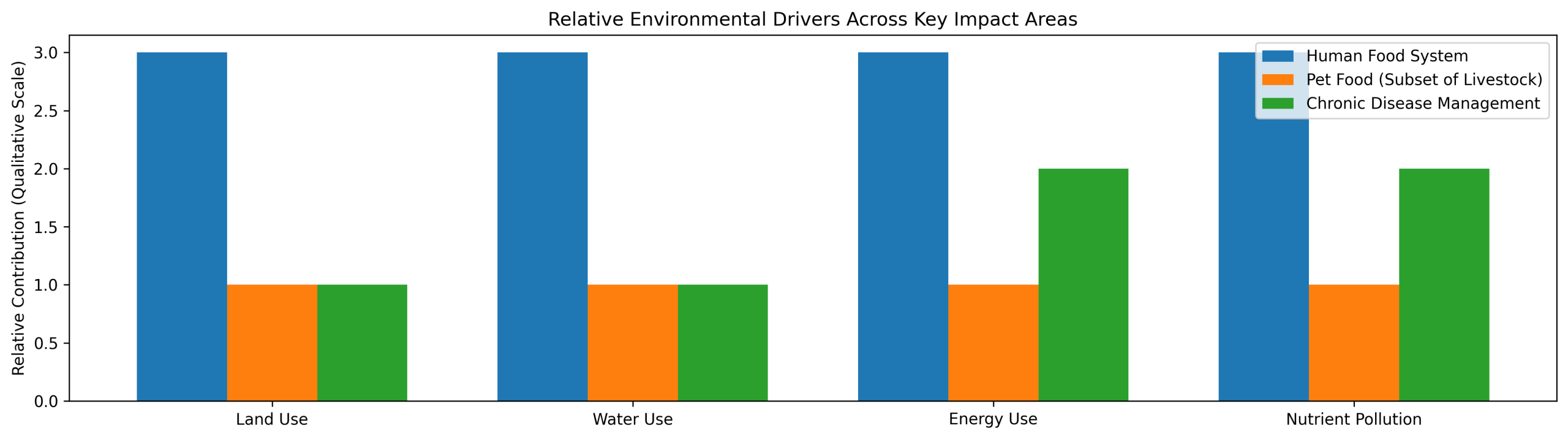
Pets can be environmentally expensive. U.S. dogs and cats consume roughly a third of America’s animal-derived energy. Some analyses have blamed pet food for as much as 25–30% of the environmental impacts from animal production, including land use, water use, fossil fuels, fertilizers, and agricultural chemicals.
That sounds alarming—but most estimates are based on theoretical models, not direct measurement. The results depend on how emissions are measured and allocated, and what assumptions the authors rely on. The most frequently cited analyses are also the most unrealistic.
Pet food primarily uses parts of animals that humans don’t eat—organ meats, trim, fats, and other co-products from animals already raised for the human food supply. Using these materials reduces waste in an existing system. Renderers like to call themselves “original recyclers,” and there’s some truth to that. But rendering also has costs in water use, energy, and air emissions.
“Upcycling” is the new marketing term for turning ingredients that might otherwise be discarded—including some human food wastes and co-products—into pet food ingredients. Certification groups now exist to verify this. It sounds virtuous, and sometimes it is. But it’s also profitable, and it’s wise to keep that motive in mind when assessing sustainability claims.
The Environmental Cost of Health
Good nutrition is the foundation of good health. Healthy pets are a smaller burden on all systems, including the environment.
It’s estimated that about 60% of U.S. dogs and cats are overweight or obese. This is harmful to health and a huge waste of resources and leads to metabolic disease and diabetes, urinary tract problems, arthritis, heart disease, and chronic inflammation. Managing these conditions typically includes pharmaceuticals, specialty diets, and veterinary visits—all of which carry environmental costs. Overfeeding increases the demand for food production–which pet food companies don’t mind, it makes them more money. Pharmaceutical companies don’t mind, they profit by treating preventable nutrition-related diseases. But it is tremendously irresponsible if we care about the planet.
Drug residues can enter wastewater systems and surface water through pet wastes. Manufacturing pharmaceuticals consumes energy and raw materials. Chronic disease has a footprint–a big one.
Veganism Isn’t the Only Answer
Plant proteins are often presented as “earth friendly.” But industrial monocrop agriculture relies heavily on fossil fuels, synthetic fertilizers, herbicides, and pesticides. Agrochemical contamination, water use, soil degradation, and biodiversity loss are real concerns. Organic and regenerative systems reduce some of these impacts, but they are not blameless.
Animal agriculture is not optional for the planet. In natural ecosystems, grazing animals are an essential component. Cattle, sheep, and goats graze land that cannot be used for crop production and convert tough, wild plants into nutrient-dense food and organic fertilizer. Much of the water used in grazing systems is rainfall, not irrigation. Feedlots represent a small fraction of the animal’s life—and they are not the only model available.
Plant nutrients are often less bioavailable for obligate carnivores like cats. Cats would have to consume far more plant material to obtain the same usable protein and amino acids they naturally get from meat-based diets.
Eliminating livestock may sound simple—but soil, nutrient cycling, and food webs are not simple. Respect for both biology and ecology are still required.
Potential Offsets
Insect protein shows promise, but digestibility, amino acid balance, palatability, and consumer acceptance are still evolving. Insect-based pet foods and treats are already available. They may play a larger role in the future—but they are not today’s solution.
Lab-grown meat could reduce land and water use and eliminate many problems associated with industrial livestock. However, it remains energy-intensive and not widely available. Its long-term environmental profile is still being evaluated. Done responsibly, it is a hopeful option—but financial and political realities have not yet aligned.
Bacterial proteins produced by fermentation are emerging and may offer smaller land and water footprints. Regulatory approval and nutritional validation are still underway.
A Reasonable Compromise
Cats are small. Their environmental footprint is modest compared to dogs—and minuscule compared to humans. Dogs, as facultative omnivores, have more flexibility and can incorporate more plant ingredients and maintain good health. Cats cannot.
Cats fed a species-appropriate, meat-based diet produce less waste. In one study, raw-fed cats produced less than half the fecal volume of kibble-fed cats. Less waste means less landfill burden. It is also less environmentally destructive, since most cat litter is strip-mined clay.
Cats on appropriate diets are also healthier. Fewer chronic diseases mean fewer medications, fewer specialty diets, fewer veterinary interventions—and less environmental cost.
To reduce your pet’s environmental footprint:
- Don’t overfeed; maintain a healthy body weight
• Prioritize high-quality, species-appropriate diets
• Choose organ meats and secondary cuts
• Opt for poultry, eggs, or small fish when appropriate
• Support regenerative or sustainable sourcing when possible
• Minimize waste
Pets are not the environmental villains they are sometimes portrayed to be. The larger drivers of environmental strain are overconsumption, ultra-processing, and chronic disease—in both humans and pets.
Sustainability is not about turning carnivores into vegans to ease human conscience. It is about understanding biology and managing systems responsibly.