

 Updated 11/13/25
With 80 zillion products on store shelves, you’ve probably gotten the message about Omega-3 fatty acids. But did you know that they’re just as important for pets as for people?
The anti-inflammatory effects of Omega-3s EPA (eicosapentanoic acid) and DHA (docosahexanoic acid) have been thoroughly researched, and are abundantly proven to be beneficial for dogs and cats. (If you’d like more background info, please click here for a more general article on Omega-3s.)
I’ve been a big fan of Omega-3s for many years. In fact, I even served on the Board of Advisors and as a consultant for Nordic Naturals. I still believe that they make the highest quality fish-based products on the market.
My Personal Revelation
Then… about 10 years ago, I was introduced to another form of Omega-3, the oil from New Zealand green lip mussels (GLM), produced by a company called MOXXOR. I used GLM products for my patients in the past, and they were very effective, especially for older kitties. But I was skeptical of this new product, having had such great results with fish oil.
But I gave GLM oil a good trial for myself and my cats. I’ve taken a hard look at the data (pro and con). I must say, I am very impressed. For example, I noticed an increase in my overall energy within just a few days of switching from my high quality (but expensive) fish oil to MOXXOR.

Green lip mussels are mollusks that are a rich source of many beneficial fatty acids, including Omega-3s.
Green Lipped Mussels
New Zealand green-lipped mussels (Perna canaliculus, GLM, also called greenlip or greenshell) are grown in the pristine Marlborough Sounds on the eastern coast. New Zealand’s Sustainable Farming Program ensures the long term viability of the GLM industry, with minimum impact on the environment. The mussels are grown systematically but 100% naturally, with no added nutrients, chemicals, or other inputs. The mussels eat plankton and algae filtered from the water.
The MOXXOR Story
MOXXOR was founded in 2004 to produce It GLM oil is organic; sustainably grown; cold-extracted; and certified free of mercury and other toxins and pollutants. The mussels are processed in a facility built right on the shore of the Marlborough sound where they are grown and harvested. This on-the-spot processing means there’s no chance of oxidation or spoilage. In addition, the other two components of MOXXOR, Sauvignon Blanc grape seed husk extract* and kiwifruit seed oil provide additional antioxidant power, including all 8 components of the Vitamin E array. These ingredients safeguard MOXXOR’s freshness and stability by scavenging the free radicals that can cause rancidity.
* There have been reports of grape toxicity in dogs, but this is not a risk with MOXXOR.
Here’s a short (4:31) video about how the mussels are grown and processed. I think it’s quite fascinating, although I am a geek at heart, so this sort of thing appeals to me!
MOXXOR’s cold, solvent-free processing makes it more bioavailable than other products. It stays in its natural form. This, as well as the absence of fillers or carrier oils, is what allows the very small GLM oil capsule to contain more antioxidant power than the larger krill and fish oil capsules.
(Click here to visit the MOXXOR website directly.)
Humane and Sustainable
Because green lip mussels are naturally raised in clean waters, they are completely sustainable. They are also far more humanely produced than fish oil products. The mussels are essentially “chilled to death” before any processing takes place. Wild free-living fish, in contrast, are pulled from the water by line or net and suffocated with thousands of their fellows). Worse, farmed fish live in confinement, eat an unnatural diet, and suffer the same fate at the end.
What Makes MOXXOR Different
MOXXOR contains all 18 known forms of Omega-3s, not just the familiar EPA and DHA. Lipids like lasmalogen, phytosterols, and furan fatty acids found in GLM oil also have health benefits but are not found in fish oil.
- Alpha-Linolenic Acid (ALA)
- Stearidonic Acid (STA)
- Eicosatrienoic Acid (ETE), 2 forms
- Eicosatetraenoic Acid (ETA), 4 forms
- Eicosapentaenoic Acid (EPA), 2 forms
- Docosapentaenoic Acid (DPA), 3 forms
- Docosahexaenoic Acid (DHA), 2 forms
- Tetrocosapentaenoic Acid (TPA), 2 forms
- Tetracosaheexaenoic Acid (THA)
(See this article for the complete list of all chemical names.)
Unique Fatty Acids and Their Benefits
One of GLM’s unique array of Omega-3s is ETA (eicosatetraenoic acid). ETA is not found in any other foods to any measurable degree. It been shown to have extremely powerful anti-inflammatory properties, even stronger than EPA.
DPA (docosapentaenoic acid) is also generating considerable interest as an anti-inflammatory molecule with specific benefits for the nervous system.
Several of these omega-3s, including TPA, are natural intermediates in the body’s conversion of ALA to DHA. In cats, dogs, and humans, this conversion is extremely inefficient, so providing omega-3 substrates may help support those limited biochemical pathways. Highly purified EPA and DHA oils (including molecularly distilled and solvent extracted forms) lack many of the natural co-factors, such as phospholipids, sterols, and antioxidants, present in whole marine extracts like MOXXOR.
Why I Trust MOXXOR
MOXXOR is a premier producer of New Zealand green lip mussel oil: it is organic; sustainably grown; cold-extracted; and certified free of mercury and other toxins and pollutants. To ensure freshness, the mussels grown for MOXXOR are processed in a facility built on the shores of the Marlborough Sound where they are grown and harvested.
In addition, the other two components of MOXXOR—Sauvignon Blanc grape seed husk extract and kiwifruit seed oil—provide additional antioxidant power, including all 8 components of the vitamin E family. These ingredients not only add extra anti-oxidant power to the oil, but they safeguard MOXXOR’s freshness and stability by scavenging the free radicals that cause rancidity.
I should also mention that I know the owner of the company very well and consider him a dear friend. We talk on the phone (Japan to USA!), he sends me pictures of his kids… we have a lovely relationship.
About the Product

Relative sizes of fish oil, krill oil, and Moxxor capsules. (Actual size of Moxxor is 8 mm, compared to fish oil at 25 mm)
MOXXOR’s cold, solvent-free processing makes it more bioavailable than other products. It stays in its natural triglyceride form. (Most Omega-3 oils are processed into esters, which the body must convert before they’re usuable.) This, as well zero fillers or carrier oils, is what allows the very small GLM oil capsule to pack more potency than other products, despite its 300 mg size.
The high concentration also makes MOXXOR very easy to give to pets! Fish oil capsules are typically HUGE–hard enough for humans to swallow, but impossible for smaller animals. Krill oil capsules are smaller, but still a chocking hazard for a cat or small dog. MOXXOR is tiny, and very simple to hide in a Pill Pocket or piece of cheese. Or puncture the capsule and just add a drop of oil to food.
MOXXOR comes in a 60-capsule bottle. The human dose is one capsule twice a day; so 60 capsules is one month’s supply for a human or giant breed dog. Smaller pets need much less. Once they’re “caught up” with any Omega-3 deficiency, a cat or small dog can take one capsule 3 or 4 times a week, so a bottle can last several months. S
See How to Use Moxxor Omega-3s for complete instructions.
Omega-3s Are Crucial!
I want to emphasize that Omega-3s are THE single most important nutritional supplement you can give your pet. Get it here, get it there… just make sure it’s a reputable product, and use it!
I believe strongly in this product; so much that I resigned a well-paid consultant position to be on MOXXOR’s Holistic Advisory Board. These folks are very serious about helping animals! But only you can decide what’s right for you and your family (fur, feathers, and all!) …
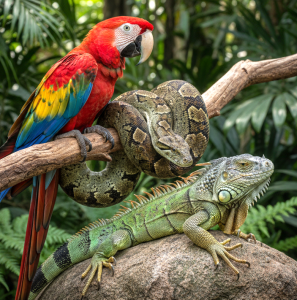
Exotic pets like birds and reptiles can also benefit from Omega-3s
Scales and Feathers Too?
Carnivorous snakes, birds, and other reptiles also require omega-3s. (Parrots are omnivorous and happily eat meat, so I’m including them here.)
Research shows that the feeder mice commonly sold for these predators do not fully meet their nutritional needs. In particular, fatty-acid profiles and vitamin E content are highly variable and often suboptimal. Both whole-prey items and commercial exotic diets tend to be heavily skewed toward pro-inflammatory omega-6 fats. This imbalance is very likely one contributor to the high incidence of arthritis and chronic inflammation observed in older parrots and other exotics.
In the wild, carnivorous birds and reptiles obtain their omega-3s naturally from the species they hunt—fish, amphibians, aquatic insects, and prey with more diverse fatty-acid signatures than commercially raised rodents. Studies show that birds (and some reptiles) readily absorb Omega-3s when these fats are available in higher-than-usual amounts.
Because of this disparity, cautiously adding a very smallamount of a balanced marine omega-3 may help correct the fatty-acid profile of captive diets.
To be absolutely clear: there is almost no direct research on Omega-3 supplementation in pet reptiles, birds, or snakes (except in poultry, where the benefits of Omega-3s are well documented). And for very small animals such as hamsters, small turtles, or sugar gliders, it is impossible to calculate a safe micro-dose. Please do not attempt to supplement pocket pets, small exotics, or juveniles.
A practical guideline:
-
For adult whole-prey feeders, I feel comfortable suggesting that you can pierce one MOXXOR capsule and use it to lightly enrich up to 5% of the mice or other prey items being fed.
-
For pelleted diets, adding up to ~3% of total caloric intake from a high-quality marine Omega-3 source is likely safe and may provide a more appropriate n-3/n-6 ratio without driving obesity.
But please, PLEASE—always discuss any supplementation with an experienced exotic-animal veterinarian. Species-specific sensitivities absolutely exist. It’s an incredibly complicated field and I don’t pretend to even try keeping up with it!
Horses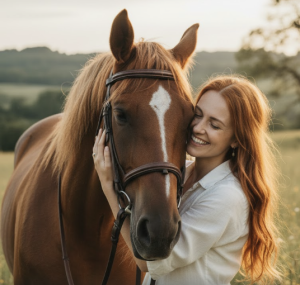
You may have gathered that I’m a little nutty about my snake friends, so you’ll really think I’m crazy when I tell you that horses do not need more MOXXOR than humans. But as herbivores, their needs are less, and direct supplementation is very effective for equids. So two capsules a day is plenty for a healthy horse, though for a sick or stressed horse, or one facing injury, or inflammatory conditions, you could give up to 4 capsules per day until the problem is resolved.
People
I’m all about the animals… so I almost forgot to mention that I take MOXXOR twice a day, and I make my friends take it, and I think everyone should take it, because we’d all feel much better!
To order Moxxor:
MOXXOR comes in a 60-capsule bottle of very small 300 mg capsules. The human dose is one capsule twice a day; so 60 capsules is one month’s supply for a human or giant breed dog. Smaller pets need much less. Once they’re “caught up” with any Omega-3 deficiency, a cat or small dog can take one capsule 3 or 4 times a week, so a bottle can last several months.
Click here to order a 60-count bottle. Use coupon code DRJEAN for 10% off!
Did I mention that healthy cats and small dogs may only need one capsule every 2 or 3 days? This is an great way to try an effective product without spending a small fortune!
NOTE: The only other brand of Omega-3 supplements that I trust is Nordic Naturals. I’ve been to their facilities, I know their quality standards, and the company’s owner is Norwegian. If anyone knows fish, it’s Norwegians (my grandfather was a salmon fisherman, and my whole family emigrated from coastal fishing villages)! Nordic has a variety of fish oil products and sizes for pets. They do not add any extra vitamin A or D to their pet products, which is a crucial difference between them and products intended for humans. These fat-soluble vitamins can easily build up to a potentially toxic amount in a small pet. It’s not okay to give just any fish oil to our animal friends!
Anyway, no matter what product you decide on, I urge you to get a reputable, marine-based Omega-3 and start using it now! It’s that important!
References
Abba C, Mussa PP, Vercelli A, Raviri G. Essential fatty acids supplementation in different-stage atopic dogs fed on a controlled diet. Journal of Animal Physiology and Animal Nutrition. 2005;89:203–207.
Bauer JE. Responses of dogs to dietary omega-3 fatty acids. Journal of the American Veterinary Medical Association. 2007;231:1657–1661.
Berntssen MH, Maage A, Julshamn K, Oeye BE, Lundebye AK. Carry-over of dioxins, PCBs, organochlorine pesticides, and brominated flame retardants from feed to fillet in Atlantic salmon (Salmo salar). Chemosphere. 2011;83:95–101.
Bierer TL, Bui LM. Improvement of arthritic signs in dogs fed green-lipped mussel (Perna canaliculus). Journal of Nutrition. 2002;132:1634S–1636S.
Boelen P, Van Dijk R, Sinninghe Damsté JS, Rijpstra WIC, Buma AGJ. On the potential application of polar and temperate marine microalgae for EPA and DHA production. AMB Express. 2013;3:26.
Bowden RG, Wilson RL, Deike E, Gentile M. Fish oil supplementation lowers C-reactive protein levels independent of triglyceride reduction in patients with end-stage renal disease. Nutrition in Clinical Practice. 2009;24:501–505.
Christmann U, Rose-Meierhöfer S, Mucha S, et al. Dynamics of DHA and EPA supplementation: incorporation into equine plasma, synovial fluid, and surfactant glycerophosphocholines. Journal of Animal Physiology and Animal Nutrition. 2021;105:1125–1134.
Cole DW, Cole R, Gaydos SJ, et al. Aquaculture: Environmental, toxicological, and health issues. International Journal of Hygiene and Environmental Health. 2009;212:369–377.
Done HY, Halden RU. Reconnaissance of 47 antibiotics and associated microbial risks in seafood sold in the United States. Journal of Hazardous Materials. 2015;282:10–17.
Dunbar BL, Bigley KE, Bauer JE. Early and sustained enrichment of serum n-3 long-chain polyunsaturated fatty acids in dogs fed a flaxseed-supplemented diet. Lipids. 2010;45:1–10.
Hites RA, Foran JA, Carpenter DO, Hamilton MC, Knuth BA, Schwager SJ. Global assessment of organic contaminants in farmed salmon. Science. 2004;303:226–229.
Meynier L, Morel PCH, MacKenzie DDS, MacGibbon AKH, Durance TD. Fatty acid composition of New Zealand marine species and the use of chemometrics for determining species and harvest location. New Zealand Journal of Marine and Freshwater Research. 2008;42:425–437.
Milley JE, Woollard DC, Strom A, et al. Detailed distribution of lipids in Greenshell™ mussel (Perna canaliculus). Journal of Agricultural and Food Chemistry. 2013;61:11151–11162.
Øie E, Ueland T, Dahl CP, et al. Fatty acid composition in chronic heart failure: low circulating levels of eicosatetraenoic acid and high levels of vaccenic acid are associated with disease severity and mortality. Journal of Internal Medicine. 2011;270:263–272.
Roush JK, Dodd CE, Fritsch DA, et al. Multicenter veterinary practice assessment of the effects of omega-3 fatty acids on osteoarthritis in dogs. Journal of the American Veterinary Medical Association. 2010;236:59–66.