Cat Behavior
Cat behavior can seem mysterious, but once you understand how your cat sees the world, it becomes much easier to manage their behavior–and your relationship!


Cat behavior can seem mysterious, but once you understand how your cat sees the world, it becomes much easier to manage their behavior–and your relationship!
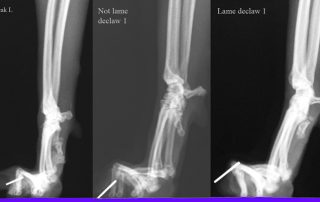
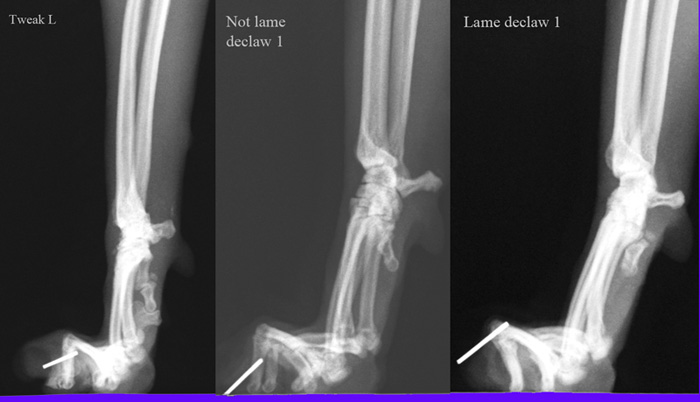
Updated 6/30/26 This summary presents the main arguments against a legal ban on declawing (of cats and other animals), and the documented, scientific facts about each one—as opposed to the opinions expressed by the American Veterinary Medical Association (AVMA) and various other individuals and organizations. Public opinion is subject to change; and the change is now moving in favor of more humane treatment of all animals. The veterinary profession is finally getting clued in, having added "animal welfare" to its Veterinarian's Oath late in 2010 (41 years after it was first written). ...
We are honored to have a wonderful guest blogger today, Dr. Shelley Brown of Harmony Veterinary Center, Arvada, CO. Dr. Brown practices integrative veterinary medicine, including acupuncture, cold laser, and homotoxicology. She is a member of the International Veterinary Academy of Pain Management. I hear it all the time--“My pet’s limping, but she’s not in pain” or “Surely he’d cry out if something hurt”. How many times have we ourselves suffered our pains in silence? Do we scream and moan every time something hurts? And why do we limp, unless something hurts? ...
Updated 9/18/25 Kitty litter used to be so simple. When I was a kid, it was my job to tear newspaper into strips for the cat's box. Easy peasy. Then they invented clay cat litter, and later clumping clay litter, and cats became America's favorite pet thanks to their adaptability to apartment living. But clay litter has problems (which we'll talk about in a minute), so companies have come up with a wide variety of alternatives. Kudos to the folks who are trying to make a cat-friendly litter from non-toxic ...
Brothers having a slight disagreement Aggression in cats is not uncommon, but it's unusual for it to be serious enough for people to seek professional help. Just a decade ago, however, a study from Cornell University noted an upward trend in people-directed aggression. Those researchers thought it may be attributable to an increasing tendency to keep cats inside the home (and thus interacting more with people). Other possible explanations: cats are actually getting more aggressive (a bad thing), or people are becoming more aware that feline behavior problems are amenable to treatment (a ...
We have long advocated play therapy as a way to prevent--and solve--a host of feline behavior problems, as well as a part of indoor enrichment for your cat's mental and physical health. Now there's another reason--longevity! In a fascinating article, ABC News ponders the question: "How could play — defined as “apparently purposeless activity that’s fun to do and pleasurable” — be vital for grim survival in such an often random and dangerous world? – And not just play in childhood, but throughout life. – And throughout life not only ...
"Ripple Skin Syndrome," or "Itchy Twitchy syndrome" (technically called "feline hyperesthesia") is a unique problem for cats. It starts as a rippling of the cat's skin on its back, from the shoulders to the tail; the cat may turn and lick or bite at the area; and most cats will run away as if something frightened or hurt them. This article explores the potential causes and what you can do to help your cat.
Updated June 30, 2026. New references will be added as they become available. Ansah OB, Vainio O, Hellsten C, et al. Postoperative pain control in cats: clinical trials with medetomidine and butorphanol. Vet Surg 2002;31:99-103. Medetomidine and butorphanol provided equivalent pain relief up to 2 hours. Atwood-Harvey D. Death or declaw: dealing with moral ambiguity in a veterinary hospital. Soc Anim. 2005;13(4):315-42. Discussed strategies used by clinic staff to cope with declawing, whatever their feelings about it. Bamberger M, Houpt KA. Signalment factors, comorbidity, and trends in behavior diagnoses in ...
Updated 7/3/26. Greatly expanded from Patronek, Studies Pertaining to Onychectomy, 2001. There were only 20 studies in the original table. There are more than 100 studies today. Click here to download the current PDF Below is an older version of this chart. If anyone knows how to get WordPress to properly upload a large Excel file, let me know! Additional studies not cited in the original noted in color; additions and comments by Jean Hofve, DVM Study No. Cats Time Relevant Outcomes Description of Study, Sample and Major Findings ...
Updated 5/30/26 Cats are smart, and they naturally know everything they need to know about being a cat. However, they do not know about things like cars, dogs, infectious diseases, and other outdoor hazards. Like young children, cats need to be protected from dangers they can't anticipate or handle. That's why Little Big Cat recommends that cats be kept indoors, and not allowed to roam loose outside. (See our article "Indoors or Outdoors" for more information.) Now, many people think that this is cruel. They say that Nature intended for ...
By Jackson Galaxy Michael, Patty, their toddler Pandora, and most of all, their cat Tess, had a big problem*. As Pandora was becoming more and more mobile, Tess was getting increasingly irritated. The problem culminated a few days before they called me, when Tess took a swipe at Pandora and broke the skin near her eye. Michael was in a true panic, since Tess had already been surrendered to the local shelter for her behavior, where she promptly turned absolutely wild. When Michael learned that Tess was to be euthanized, ...
Updated 7/16/25 by Jackson Galaxy As you pass innocently by a doorway, your cat pounces fiercely on your ankle, gnawing and clawing until blood is drawn, and then bolting away under the bed...Two littermates, now six years old, suddenly start fighting and can’t be in the same room together anymore...Perhaps your cat is vocalizing so loudly at 4:00 A.M. that you seriously wish that you had become a tropical fish enthusiast somewhere along the line. Strange as it may seem, these unpleasant activities may have a common cause—and a common ...
By Jean Hofve, DVM Flower essences (remedies) are specially prepared extracts of the flowering parts of certain plants. They work through biofield energy to heal stress and disease from the inside. Flower essences were first developed by Dr. Edward Bach, an English physician who gave up his busy practice to study and prepare the 38 flower essences which now bear his name. We frequently use essences to help with mental, emotional, and behavioral problems in animals. Since Dr. Bach's time, many other essences have been created around the world, not ...
Kittens, like all animal babies, need special care. It is important to provide lots of love and, as well as more practical items like toys, a litter box, and an adequate scratching pad or post. Be sure to kitten-proof your house, removing small or delicate items to prevent damage by curious little paws and teeth. Kittens are great climbers, so think vertically!
By Jean Hofve, DVM Are you thinking about allowing your cat to go outside without restriction? To make the right decision, you need to know the facts. The average lifespan of an indoor cat is 15-18 years. For a cat allowed outdoors, the average life is only 2-5 years. There are many dangers that can harm or kill an outdoor cat. (However, there are safe alternatives to simply opening the door; see our article on Outdoor Safety for more info.) If your cat roams outside, or you're considering allowing it, ...
By Jackson Galaxy Every doting cat guardian, it seems, is always on the lookout for the latest, greatest toy – something that will capture their kitty companion's attention and hone his or her hunting skills. One of the tried and true is the good old laser pointer. Dogs as well as cats generally seem very "turned on" by the spot on the wall that travels quickly across the floor, onto the table, couch, etc. Many pet folks have found that they have to literally show their cat or dog the ...