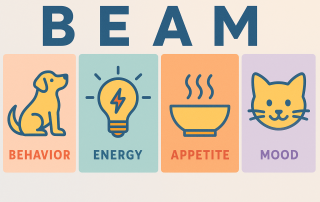
BEAM: Clarify Your Pet’s Health Journey

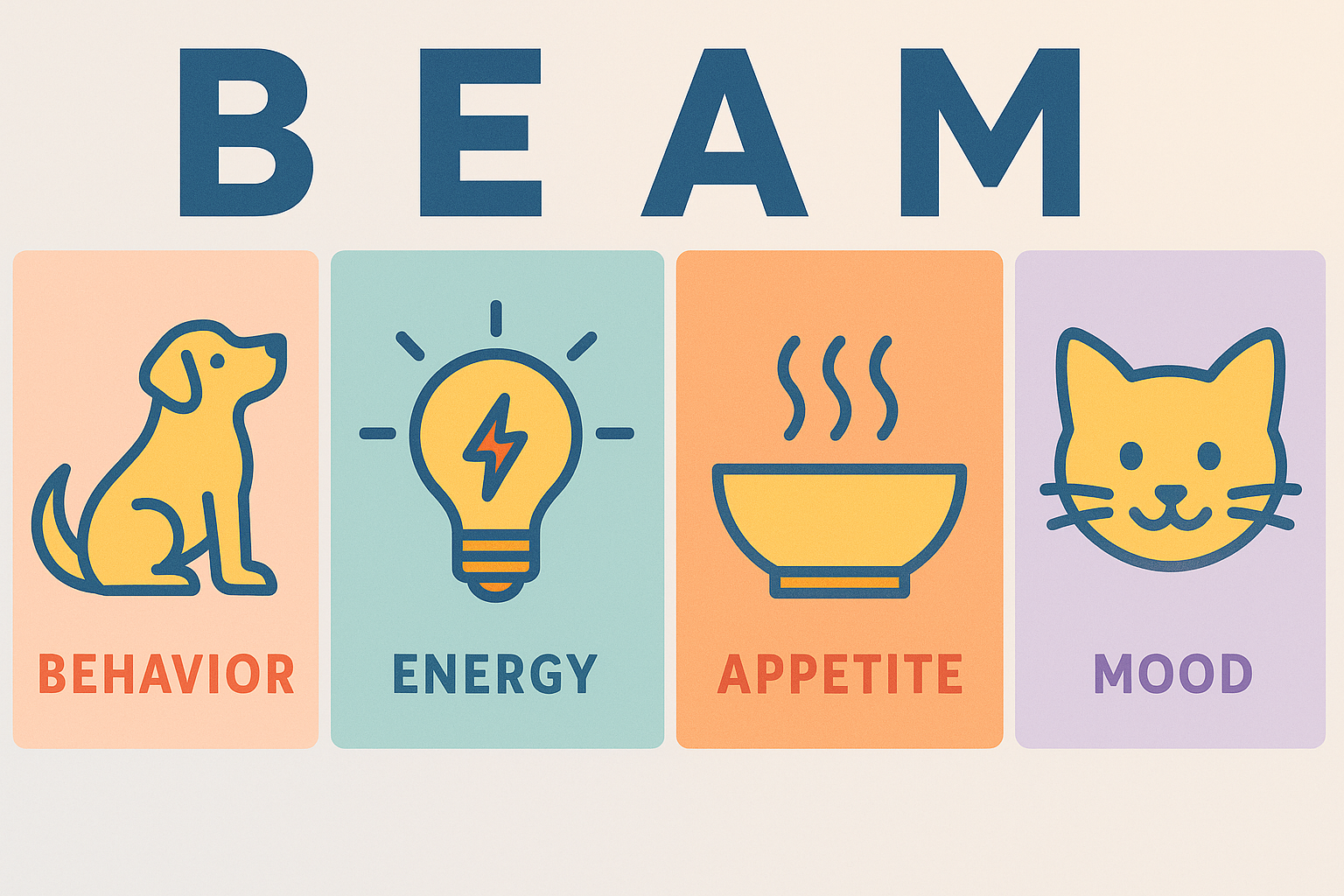
B.E.A.M. stands for Behavior, Energy, Appetite, and Mood, and it gives you a quick, reliable snapshot of your pet’s overall wellbeing. When BEAM looks bright, things are good. When BEAM goes down, something’s off — even if you don’t see an obvious symptom yet. Genetics, Epigenetics, and the Exposome Modern medicine often focuses on genes, as if they are the cause of disease (they’re not). CRISPR-based drugs and genetic editing are the hottest areas of research right now. But genes are not the whole story. DNA is the blueprint that ...


2026-07-04T13:11:03-07:00November 25th, 2025|

MOXXOR Omega-3s

Updated 11/13/25 With 80 zillion products on store shelves, you've probably gotten the message about Omega-3 fatty acids. But did you know that they're just as important for pets as for people? The anti-inflammatory effects of Omega-3s EPA (eicosapentanoic acid) and DHA (docosahexanoic acid) have been thoroughly researched, and are abundantly proven to be beneficial for dogs and cats. (If you'd like more background info, please click here for a more general article on Omega-3s.) I've been a big fan of Omega-3s for many years. In fact, I even served ...

2025-11-17T20:08:20-07:00March 15th, 2017|

Coconut Oil and Cats

Updated 4/29/26 Questions about coconut oil keep coming up, so I want to explain why I don't recommend giving it to cats. Cats Need the Right Fats The carnivore's natural diet is high in both protein and animal fat. There are only three essential fatty acids that cats must obtain from their diet: linoleic acid (LA), alpha linolenic acid (ALA) and arachidonic acid (AA). Adult cats can benefit from many other fats and oils, particularly EPA and DHA (which kittens require), but they aren't necessary for survival. Coconut oil is ...

2026-04-29T18:42:26-07:00June 29th, 2016|

Grape and Raisin Toxicity

Updated November 10, 2025 Beginning in the 1990s, veterinarians began seeing dogs who developed acute kidney failure after eating grapes, raisins, or currants. The cause was a total mystery for decades. But in 2021, tartaric acid (the basis of cream of tartar) was discovered to be the part of grapes that cause them to be toxic to pets. The amount of tartaric acid can vary in grapes by their type, how they were grown, and how ripe they are, which could explain why some pets get very sick while others ...

2025-11-11T00:17:41-07:00February 1st, 2014|

Carrageenan: a Controversial Pet Food Additive

Updated 10/10/26 Carrageenan is a seaweed derivative that is commonly used as a food additive in a wide variety of products. There has been a lot of controversy about this ingredient, so let’s take a look at it in more detail. Carragreenan is an  edible red seaweed. Sounds good, right? Many seaweeds contain lots of trace minerals and are very nutritious. “Carraigín” has been made from Irish Moss in kitchens for hundreds of years, to create the base for a pudding-like dessert. When cooked, carrageenan takes on a nice gelatinous texture. ...

2026-10-10T11:25:05-07:00January 30th, 2014|

Choosing an Omega-3 Oil for Your Pet

Updated November 2025 You may already know how important Omega-3 fatty acid supplementation is for dogs and cats. I consider it to be the #1 most important supplement you can give your pet. The anti-inflammatory effects of Omega-3s EPA (eicosapentaenoic acid) and DHA (docosahexaenoic acid) have been thoroughly researched. Omega-3 supplementation has proven to be beneficial for dogs and cats for a wide variety of conditions, including chronic kidney disease(1), arthritis(2), allergies(3), and skin and coat problems(4). Veterinary experts recommend up to 1000 mg/day of EPA/DHA to treat cancer, autoimmune, and ...

2026-05-12T19:49:54-07:00January 24th, 2014|

Declawing and Science

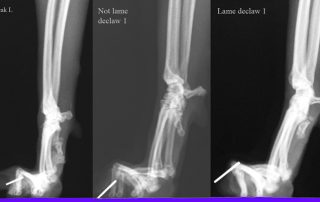
Updated 6/30/26 This summary presents the main arguments against a legal ban on declawing (of cats and other animals), and the documented, scientific facts about each one—as opposed to the opinions expressed by the American Veterinary Medical Association (AVMA) and various other individuals and organizations. Public opinion is subject to change; and the change is now moving in favor of more humane treatment of all animals. The veterinary profession is finally getting clued in, having added "animal welfare" to its Veterinarian's Oath late in 2010 (41 years after it was first written). ...

2026-07-02T21:16:58-07:00April 24th, 2013|

Declawing – Annotated Reference List

Updated June 30, 2026. New references will be added as they become available. Ansah OB, Vainio O, Hellsten C, et al. Postoperative pain control in cats: clinical trials with medetomidine and butorphanol. Vet Surg 2002;31:99-103. Medetomidine and butorphanol provided equivalent pain relief up to 2 hours. Atwood-Harvey D. Death or declaw: dealing with moral ambiguity in a veterinary hospital. Soc Anim. 2005;13(4):315-42. Discussed strategies used by clinic staff to cope with declawing, whatever their feelings about it. Bamberger M, Houpt KA. Signalment factors, comorbidity, and trends in behavior diagnoses in ...

2026-06-30T22:09:07-07:00August 2nd, 2011|

Studies Pertaining to Declawing (Annotated)

Updated 7/3/26. Greatly expanded from Patronek, Studies Pertaining to Onychectomy, 2001. There were only 20 studies in the original table. There are more than 100 studies today. Click here to download the current PDF Below is an older version of this chart. If anyone knows how to get WordPress to properly upload a large Excel file, let me know! Additional studies not cited in the original noted in color; additions and comments by Jean Hofve, DVM Study No. Cats Time Relevant Outcomes Description of Study, Sample and Major Findings   ...

2026-08-08T07:53:21-07:00August 2nd, 2011|

Indoor Enrichment for Cats

Updated 5/30/26 Cats are smart, and they naturally know everything they need to know about being a cat. However, they do not know about things like cars, dogs, infectious diseases, and other outdoor hazards. Like young children, cats need to be protected from dangers they can't anticipate or handle. That's why Little Big Cat recommends that cats be kept indoors, and not allowed to roam loose outside. (See our article "Indoors or Outdoors" for more information.) Now, many people think that this is cruel. They say that Nature intended for ...

2026-05-30T11:26:32-07:00August 2nd, 2011|

Fish Oil and Hyperthyroidism — Is There a Link?

By Jean Hofve, DVM A reader recently quoted part of one of our newsletters in an email, and (in addition to the subject of her email, which was our warning about alpha lipoic acid) expressed concern about Omega-3 fatty acids and their potential association with high iodine levels and feline thyroid disease. She was wary of fish oils, and although I can see how her concern came about, the basis of many of her worries is unfounded. I'd like to set the record straight. Iodine is stored in the body ...

2026-10-10T11:28:00-07:00November 18th, 2010|

Switching Foods

Updated 8/24/26 The spice of life is variety, or so they say. If that's true for people, what about our dogs and cats? I love the commercial where the lady puts down a bowl of new dog food, and the dog shoves it under the rug. The voice-over intones, "(Our food), every day." It's very clever advertising, intended to put all of your pet food dollars into just one manufacturer's pocket. But the concept is all wrong. For many of us, our animal companions are our children. So let's imagine ...

2026-08-24T11:33:16-07:00November 18th, 2010|
Go to Top